











When arranging furniture in a small bedroom, every inch of space counts. You might find the only logical place for your bed is directly over a floor vent. This common dilemma leads many to ask: is it okay to put a bed over a floor vent?
This post will guide you through the issues of blocking a floor vent and offer practical advice if it’s unavoidable. We will explore key considerations like bed frame design, vent types, and alternative solutions to help you create a comfortable, safe bedroom layout without compromising your HVAC system.
Why Blocking a Floor Vent is a Bad Idea

Floor vents are essential parts of your home’s HVAC system. They deliver heated or cooled air to maintain a comfortable temperature. When a vent is blocked, it can cause several problems.
First, restricting airflow reduces your HVAC system’s efficiency. The system works harder to heat or cool the room, leading to higher energy bills and premature wear on its components. An overworked system is more likely to break down, resulting in costly repairs. (Peek & Rett, 2025)
Remodelling. Second, placing furniture directly over a vent can cause damage. The constant flow of hot or cool air can warp wooden bed frames, rust metal fasteners, or create moisture under your mattress. This moisture is ideal for mould and mildew, which can pose health risks and damage your mattress over time. (Addressing Indoor Environmental Concerns During Remodelling, 2023)Placing a Bed Over a Vent
Ideally, all furniture should be positioned at least 6 to 12 inches away from floor vents to ensure proper airflow. However, if the size and layout of your room make this impossible, consider a few factors to minimize the negative effects.
Bed Frame Height and Design

The type of bed frame you have makes a significant difference. A mattress placed directly on the floor over a vent will completely block airflow. This is inefficient and can also be a fire hazard with certain heating systems. (Peek & Rett, 2023)
If you must place your bed over a vent, choose a frame that allows maximum airflow. Look for a frame with at least 18 inches of clearance from the floor. An open-base design without solid sideboards or built-in drawers is best. This height and openness let air circulate from under the bed into the room.
Size and Type of Vent
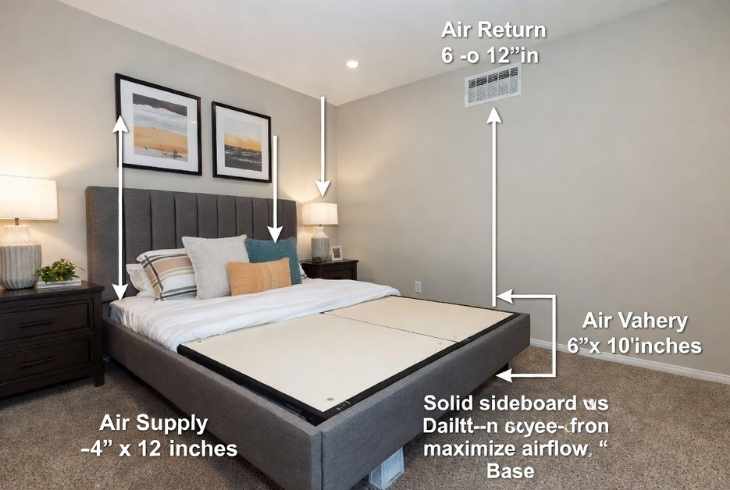
Bedrooms typically have air supply vents, which push air into the room. Common sizes include 4″ x 10″ and 6″ x 12″. (Flair Smart Vent Dimensions, n.d.) While smaller vents might seem less critical to keep clear, they still require the same amount of clearance as larger ones to function effectively.
It’s also important to distinguish between supply vents and air return vents. Air return vents, which pull air out of the room and return it to the HVAC system, are usually much larger and often located on walls. These vents should never be blocked in any way, as this can severely impact the performance of your entire HVAC system. (Can a blocked return vent cause air duct issues?, 2025) Always allow at least 6 to 12 inches of clearance around an air return vent.
Your Room’s Airflow
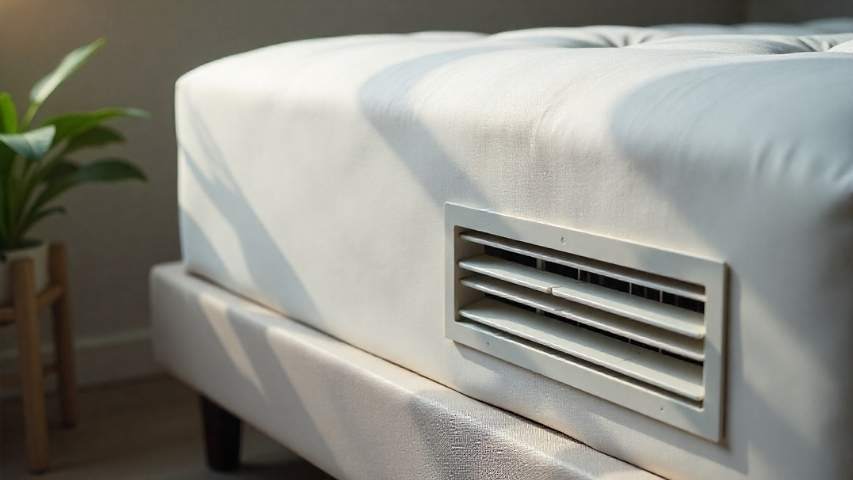
The force of air from a vent can vary depending on its location. A vent on the main floor above the furnace will likely have stronger airflow than one on the second floor at the opposite end of the house.
If you place a bed over a vent with weak airflow, you’ll reduce its effectiveness and make the room less comfortable. You can use the louvers on the vent register to redirect air toward the nearest open edge of the bed, helping it escape more easily.
How to Maintain Airflow if Covering a Vent is Unavoidable
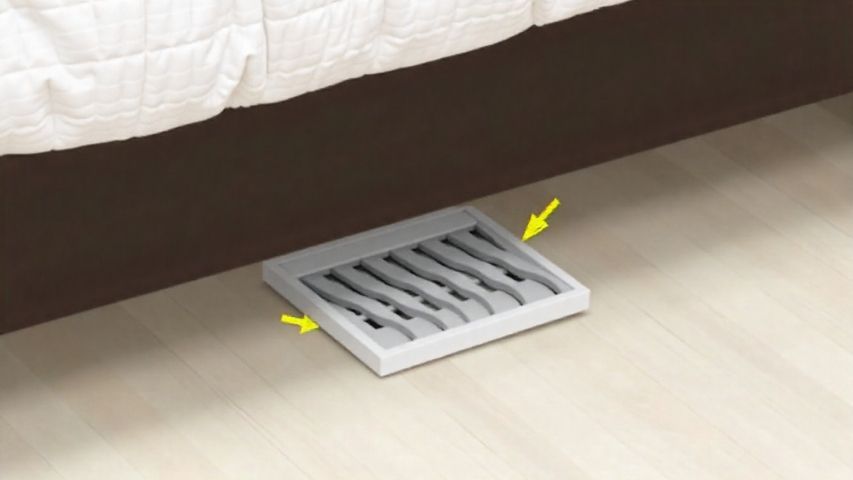
If your bedroom layout leaves you with no other choice, these tips can help you maintain proper airflow and minimize potential problems.
- Elevate Your Bed: If your bed frame is too low, use bed risers to increase clearance between the floor and the bed. This is a simple, inexpensive way to improve airflow.
- Install a Vent Deflector: A vent deflector is a plastic or metal cover that fits over the vent and redirects air in a specific direction. (DIY Floor Vent Deflector Sideways Under Bed, n.d.) Use one to guide airflow out from under the bed.
- Use a Vent Extender: For a more effective solution, a vent extender can be installed to channel the air from the vent to an opening beyond the edge of the bed. These are particularly useful for beds with solid frames. (Furnace Vent Extender, n.d.)
- Clean Vents Regularly: Keep the area around and under the bed clean. Dust, pet hair, and debris can block the vent and restrict airflow.
Better Alternatives to Covering a Floor Vent
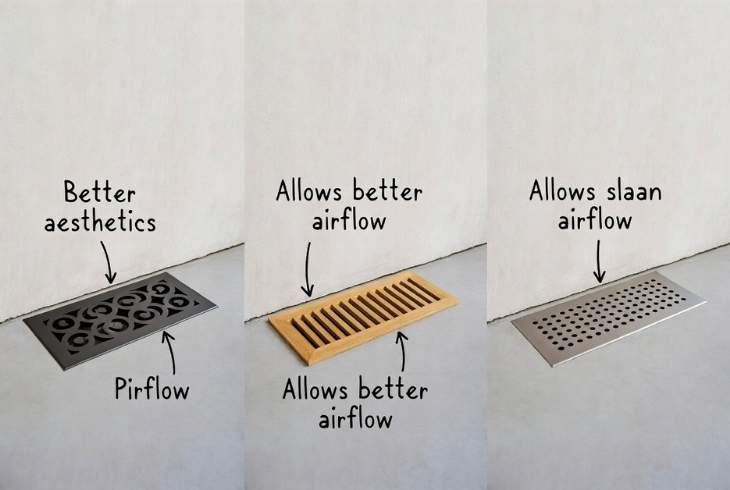
Before you place your bed over a vent, consider these alternative solutions that might provide a better long-term outcome.
Rethink Your Room Layout
Sometimes, a fresh perspective is all you need. Try sketching different furniture arrangements on paper before moving heavy items. Consider unconventional placements, such as angling the bed in a corner, to see if you can create a layout that keeps the vent uncovered.
Declutter and Minimize Furniture
Do you really need every piece of furniture in your bedroom? Getting rid of oversized or unnecessary items, like a bulky dresser or an extra armchair, can free up valuable floor space. A more minimalist approach might open up new layout possibilities that work around the vent.
Move the Floor Vent
While it is the most involved and expensive option, relocating the vent is the most permanent solution. An HVAC professional can move the ductwork and install the vent in a more convenient location. (How Much Does It Cost to Reroute Ductwork?, 2025) This solves the problem for good and gives you complete freedom with your furniture arrangement.
Create a Comfortable and Functional Space
While it’s best to avoid placing a bed over a floor vent, it’s not always possible. By choosing the right bed frame, ensuring adequate clearance, and using tools like vent deflectors, you can reduce most negative effects. These steps help keep your room comfortable, your energy bills in check, and your HVAC system running smoothly.
If you’re still struggling with your room’s layout, remember that a little creativity can go a long way. Experiment with different arrangements and don’t be afraid to think outside the box to create a space that is both stylish and functional.