










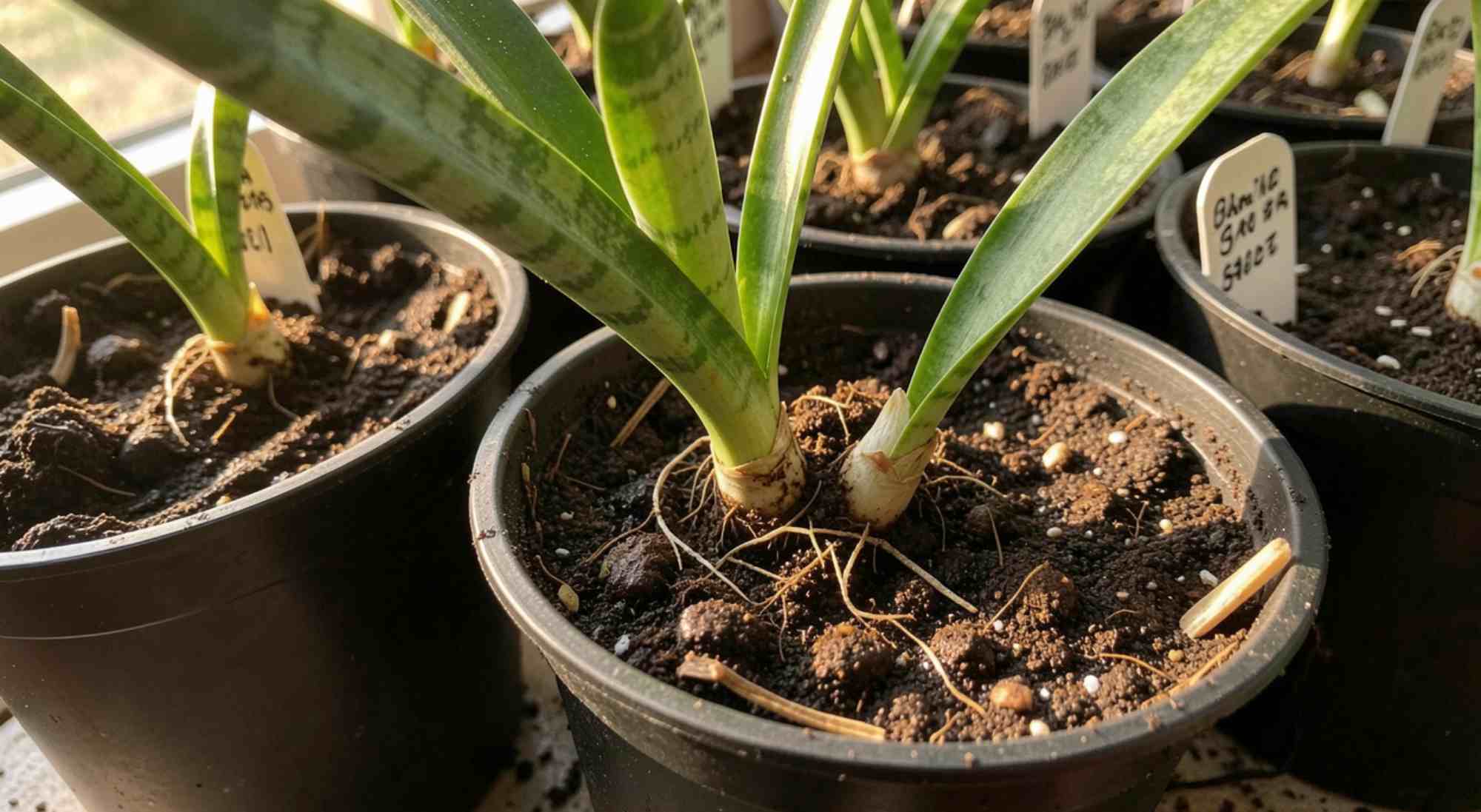
Snake plants are one of those houseplants you never get tired of. With their bold, upright leaves and nearly indestructible nature, they’re perfect for both beginners and experienced plant lovers.
The best part? You don’t need to keep buying new ones to grow your collection. Propagating snake plants is simple, rewarding, and budget-friendly. In this guide, you’ll learn three reliable methods that actually work.
Why Snake Plants Are So Easy to Propagate
Snake plants are incredibly adaptable. Although they originate from tropical and subtropical regions, they thrive indoors—even in dry conditions with low humidity.
They grow from underground stems called rhizomes, which spread and produce new shoots (often called “pups”). This natural growth pattern makes them especially easy to multiply.
Botanical Name: Dracaena spp. (formerly Sansevieria)
Common Names: Snake Plant, Mother-in-Law’s Tongue, Bowstring Hemp, Devil’s Tongue
When Is the Best Time to Propagate?
The ideal time to propagate snake plants is during:
- Spring
- Summer
- Early fall
While it’s possible to propagate in winter, growth will be slower since the plant isn’t actively growing.
Light Requirements
Place your cuttings or divisions in bright, indirect light. Avoid direct sunlight, as it can scorch the leaves and slow down the rooting process.
What You’ll Need
Soil Mix:
Use a light, well-draining mix such as:
- Cactus or succulent soil
- Regular potting mix with added perlite or pumice
Pot:
Any material works (plastic, ceramic, or terracotta), but make sure it has drainage holes.
Tools:
- Sharp knife or pruners
- Small trowel (for dividing plants)
Clean, sharp tools are important to prevent damage and help the plant heal faster.
Aftercare Tips
Snake plants are succulents, so they don’t need much water.
- Keep the soil slightly moist, not wet
- Let the top layer dry out before watering again
- Avoid overwatering, which can cause root rot
Be patient—new roots and growth can take weeks or even months to appear.
3 Proven Ways to Propagate Snake Plants
1. Propagation by Division (Fastest Method)
This method involves splitting one mature plant into multiple smaller ones.
Steps:
- Remove the plant from its pot
- Gently separate the root system into sections
- Use a knife or pruners if needed
- Replant each section in its own pot
Why it works:
Each division already has roots, so it establishes quickly.
2. Propagation by Leaf Cuttings
This is a slower method but very satisfying.
Steps:
- Cut a healthy leaf using a sharp knife
- Divide it into sections if desired
- Let the cut ends dry for 1–2 days
- Plant the cuttings in soil (right side up)
Important Tip:
If you plant the cutting upside down, it won’t root.
Note on Variegation:
Variegated snake plants (with yellow edges) will lose their stripes when propagated this way.
3. Propagation by Rhizomes
Rhizomes are underground stems that spread and create new plants.
Steps:
- Locate rhizomes or small “pups” near the parent plant
- Cut them away carefully
- Let them dry for 2–3 days
- Plant them in fresh soil
Some rhizomes already have roots, while others will develop them after planting.
Can You Propagate Snake Plants in Water?
While some people use water propagation, it’s not included here since soil methods tend to be more reliable. If you try it:
- Transfer to soil once roots reach about ½ inch
- Don’t leave them in water too long
Frequently Asked Questions
What’s the fastest method?
Division is the quickest since the plant already has roots.
Why are my cuttings rotting?
Usually due to:
- Too much water
- Poor drainage
- Heavy soil
Do I need rooting hormone?
No, snake plants root easily without it.
Will variegated plants keep their patterns?
No, leaf cuttings will revert to solid green.
Can I grow a plant from just a leaf?
Yes! Leaf cuttings will eventually produce new plants.
Final Thoughts
Propagating snake plants is a simple way to expand your indoor garden without spending extra money. Whether you choose division, leaf cuttings, or rhizomes, each method offers its own rewards.