








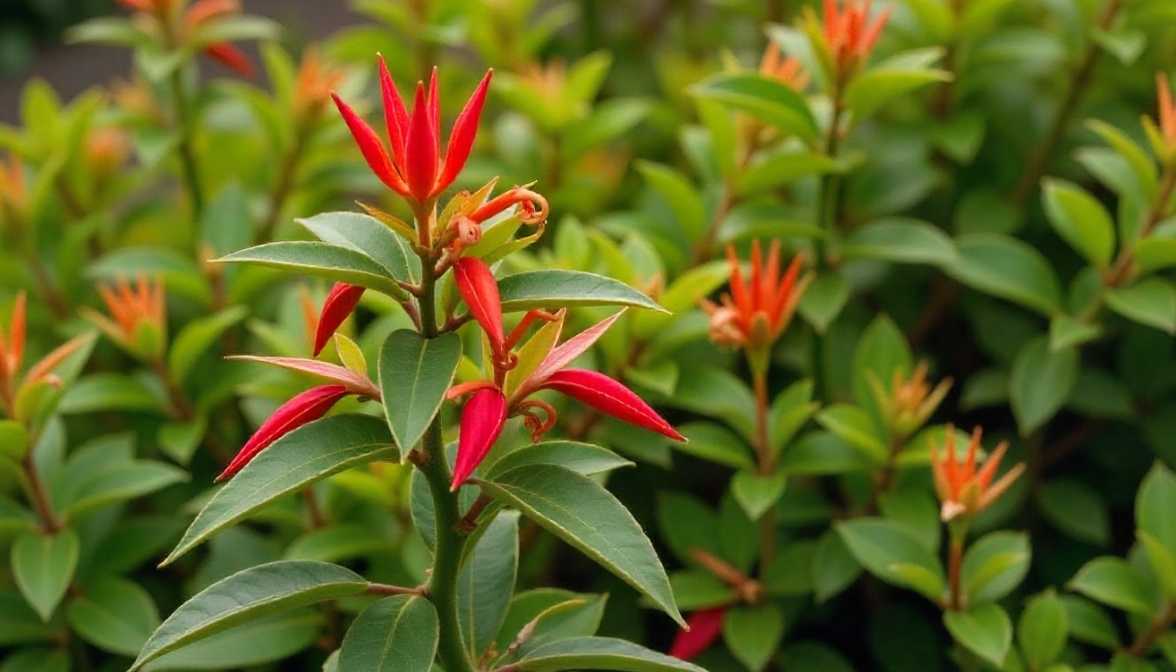
The parrot’s beak plant is named for its beak-shaped flowers, which bloom in bright red and orange. Its silvery, needle-like leaves and trailing stems give any garden an eye-catching, tropical look.
Lotus berthelotii, or parrot’s beak, comes from the Canary Islands. (Lotus berthelotii – Gardening Responsibly, n.d.) It grows best in warm places but is often grown as an annual in cooler areas. Its trailing stems work well in hanging baskets, containers, or over rock walls.
Parrot’s beak can be a little harder to grow than some other annuals, but with the right tips, you can succeed. This guide covers everything you need to know, from planting and watering to propagation and choosing companion plants.
What is a Parrot’s Beak Plant?

Parrot’s beak (Lotus berthelotii) is a trailing evergreen plant with soft, silver-grey leaves and bright red flowers shaped like a parrot’s beak. It usually grows 6 to 12 inches tall and spreads 2 to 3 feet, making it a great groundcover or trailing plant.
The plant’s unique flower shape is believed to be an adaptation for bird pollination. (Lotus berthelotii, n.d.) Sadly, due to habitat destruction and a decline in its natural pollinators, the parrot’s beak plant is now rare in the wild. (Lotus berthelotii, n.d.) It is primarily cultivated as an ornamental plant, prized for its dramatic blooms and delicate foliage. It even holds the prestigious Award of Garden Merit from the Royal Horticultural Society. (Lotus berthelotii × maculatus, n.d.)
How to Plant and Care for Parrot’s Beak
To help your parrot’s beak thrive, make sure it has the right growing conditions. The plant can be a little fussy, but its beautiful flowers make the extra care worthwhile.
Planting

- Where to Plant: Choose a location that receives full sun. In very hot climates, a spot with partial afternoon shade is ideal. Parrot’s beak is hardy in USDA Zones 10-11, where it can be grown as a perennial. (Lotus berthelotii ‘Scarlet’, n.d.) In cooler zones, it’s treated as an annual. It thrives in rock gardens, as a small-scale groundcover, or cascading over walls and in hanging baskets.
- When to Plant: In Zones 10-11, plant nursery transplants in the fall. In cooler areas, plant in early spring after the last frost.
- Soil: Use light, loamy, well-drained soil with a neutral pH. For containers, use a regular potting mix and add perlite or vermiculite for improved drainage.
Light
Parrot’s beak flourishes in full sun, which encourages more vigorous branching and brings out the best in its silver foliage. If grown in partial shade, the plant may become leggy, and its leaves may appear greener than silver. In areas with intense summer heat, afternoon shade can protect it from stress.
Water
Proper watering is crucial. The soil should be kept consistently moist but never waterlogged. Allow the top layer of soil to dry out between waterings. Leaf drop is a common sign of both overwatering and underwatering, so it’s important to monitor soil moisture carefully.
Temperature and Humidity
This plant prefers moderate temperatures and is sensitive to extreme heat and cold. It flowers best at night, typically in spring and early summer. If nighttime temperatures are consistently high during the summer, the plant may stop blooming altogether.
Fertilizer
To support healthy growth and vibrant blooms, feed your parrot’s beak regularly. Apply a water-soluble fertilizer twice a week during the spring and summer, following the product’s instructions. Alternatively, you can mix a slow-release granular fertilizer into the soil in early spring.
Pruning
Pinching back the tips of young plants encourages fuller, bushier growth and prevents them from becoming leggy. If an older plant starts to look sparse, you can trim it back to stimulate new growth. For perennial plants in Zones 10-11, prune them in late winter to prepare for the spring growth spurt.
How to Propagate Parrot’s Beak
You can easily create new parrot’s beak plants from either cuttings or seeds.
Propagation from Cuttings
- Take 3- to 4-inch cuttings about 8-10 weeks before the last spring frost.
- Remove the leaves from the bottom inch of the stem.
- Plant the cuttings in a moist, soilless potting mix.
- Keep them in a warm, humid environment until roots form.
- Once new growth appears, transplant the cuttings into larger pots and pinch the tips to encourage branching.
- Move them outdoors after the danger of frost has passed.
Propagation from Seeds
- Collect a seed pod after the plant has finished blooming. Allow it to dry in a paper bag for several days.
- Remove the seeds and plant them in small pots with a moistened seed-starting mix.
- Cover the pots with a clear plastic bag and place them in a cool, bright spot out of direct sunlight.
- Once the seeds sprout, remove the bag and keep the soil moist.
- Note that plants grown from seed will not flower until their second year. (Lotus berthelotii, n.d.)
Pests and Problems
Parrot’s beak is generally resistant to pests and diseases, especially when grown outdoors. (Lotus berthelotii or Parrot beak | Care and Growing, n.d.) The main threats are extreme heat or cold. When grown indoors, it can be susceptible to spider mites, aphids, and mealybugs.
Beautiful Garden Companions
The parrot’s beak plant has a unique texture and colour that pairs well with many other plants. Its silvery leaves stand out next to plants with bright colours and different shapes.
- Angelonia: Also known as summer snapdragon, it has tall, spiky flowers in purple, white, or pink that look nice with the trailing parrot’s beak.
- Gerbera Daisy: These big, colourful flowers make a bright display next to the red blooms of parrot’s beak.
- Lisianthus: With flowers, Lisianthus adds elegance, and its long-lasting blooms are great. Tropical Treasure
With its bright, claw-shaped flowers and silvery leaves, the parrot’s beak plant stands out in any garden. It needs some special care, especially with temperature and water, but the beautiful display is worth it. Whether in a basket, container, or as groundcover, this rare plant adds a tropical feel to your home.