








After weeks of caring for your tomato seedlings and watching them grow, you notice signs of trouble as the fruits start to ripen. Chewed leaves, spotted fruit, or wilting stems appear. Sadly, pests are just as fond of tomatoes as we are.
Finding insects on your tomato plants can be frustrating, but try not to reach for chemical sprays right away. Many garden insects are helpful because they eat the pests causing damage. To protect your harvest, first identify the pest and then choose a control method that works and is safe for your garden.
This guide will walk you through the most common tomato plant pests, helping you identify them by the damage they cause. You’ll also learn the best strategies to manage these unwelcome visitors so that you can enjoy a healthy, bountiful tomato harvest.
Creeping and Crawling Pests
These pests are often found on tomato plants’ leaves and stems, and their damage can range from minor cosmetic issues to complete defoliation.
Hornworms
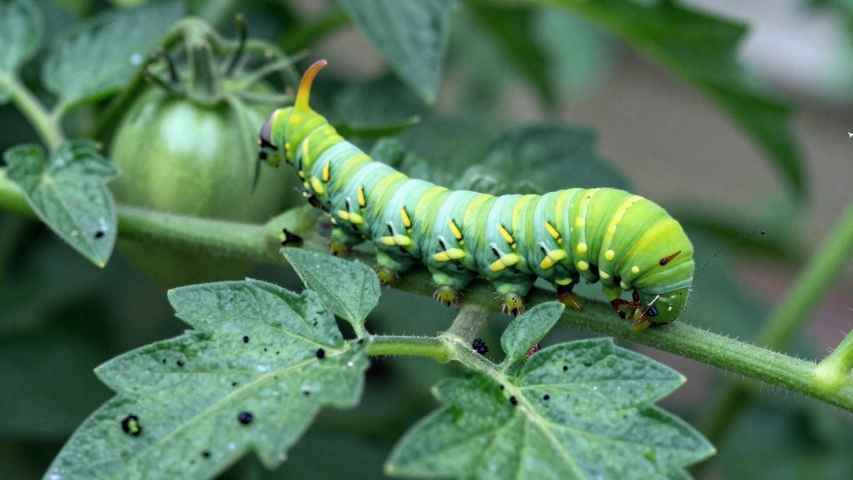
Hornworms are perhaps the best-known tomato pest. (Tomato Hornworms: What Are They and How to Get Rid of Them, 2025) These large, bright green caterpillars can grow up to 4 inches long. They get their name from the horn on their back end and have V-shaped markings that help them hide among tomato leaves.
- Signs of Damage: Hornworms are voracious eaters. They can strip a tomato plant of its leaves in just a day or two. (The 14 Most Common Tomato Pests & How to Stop Them Fast, n.d.) While they primarily feed on foliage, they have also been known to take bites out of green, unripe fruit. You’ll often spot their large, black, or dark green droppings (called frass) on the leaves below where they are feeding.
- How to Control Them: Since hornworms are big, picking them off by hand works well. Drop them into a bucket of soapy water. You can also encourage natural predators, such as parasitic braconid wasps. If you see a hornworm with white, rice-like cocoons on its back, leave it alone. Those are wasp larvae that will hatch and help control hornworms.
Cutworms
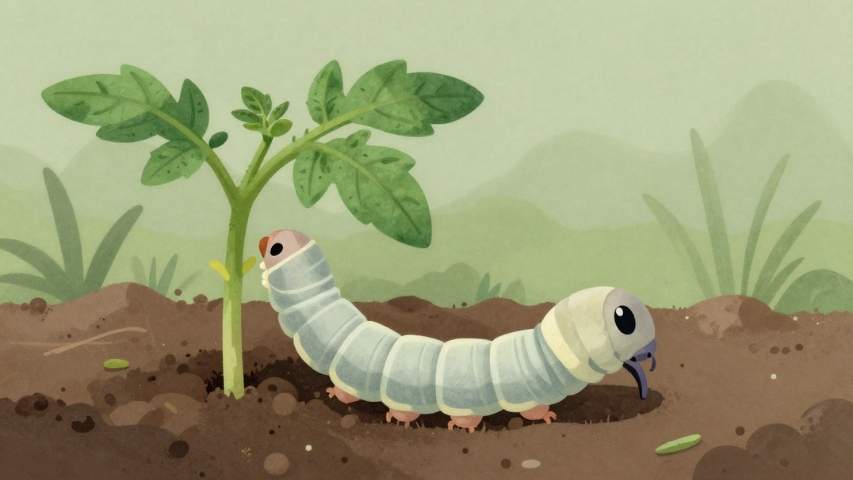
Cutworms are the caterpillar larvae of several moths and are especially harmful to young tomato seedlings. These plump caterpillars are usually gray, brown, or black and curl into a C-shape if touched. They come out mostly at night.
- Signs of Damage: Cutworms chew through the stems of young plants right at the soil line, sometimes cutting the plant off completely. You might find a healthy seedling knocked over in the morning. On bigger plants, they may only chew partway through the stem, which can make the plant wilt.
- How to Control Them: Put cardboard or aluminum foil collars around the base of your seedlings to block cutworms. Since they hide in the soil during the day, turning over the garden bed in the fall can help destroy any larvae left behind.
Armyworms
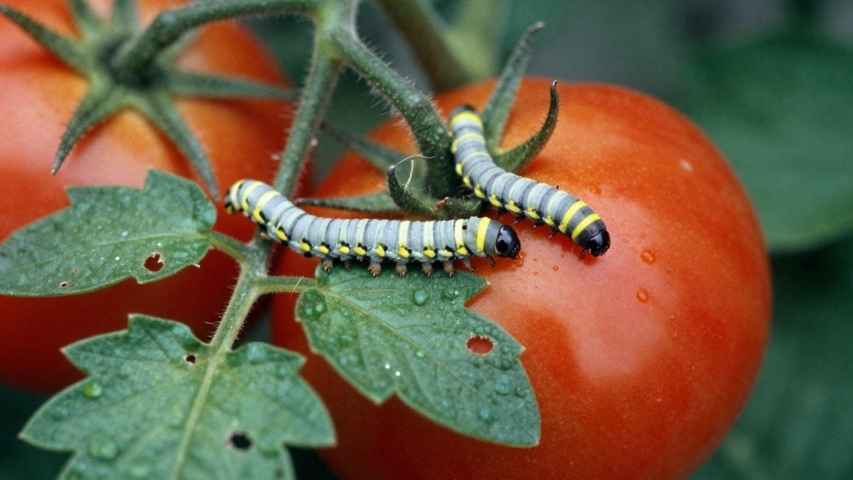
Armyworm caterpillars are pale gray to black and have a yellow stripe on each side. (Yellowstriped Armyworm on Tomatoes, 2024) They are called armyworms because they move in large groups and eat everything in their way. (Armyworms, n.d.)
- Signs of Damage: Small armyworm larvae feed on tomato leaves, but as they grow, they move to the fruit. They chew small, shallow holes in ripening tomatoes, often damaging entire clusters.
- How to Control Them: Try to catch armyworms early. If you find them while they are still small, you can use Bacillus thuringiensis (Bt), a natural bacterium that kills caterpillars but is safe for other animals.
Sucking Insects
These small pests use their mouthparts to suck sap from plants. This can weaken the plant, cause odd growth, and spread diseases.
Aphids
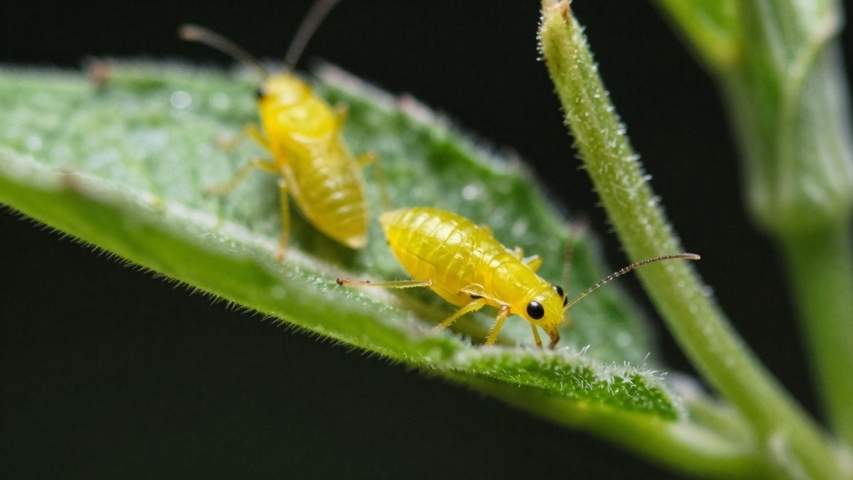
Aphids are tiny, soft insects that can be yellow, green, or black. (Aphids: Identification, Damage, and Natural Control Methods, n.d.) They gather on the undersides of leaves and on new shoots, and they multiply quickly.
- Signs of Damage: Aphids suck sap from plants, making leaves curl and turn yellow. They also leave behind a sticky substance called “honeydew,” which can cause black, sooty mold to grow. (Tomato Pests & Disease Problems, n.d.) While they rarely kill mature plants, a big infestation can lower your harvest.
- How to Control Them: A strong blast of water from a hose can knock aphids off your plants. You can also encourage natural predators, such as ladybugs and lacewings, which are voracious aphid eaters. Insecticidal soaps can be used for heavy infestations, but be sure to cover the undersides of the leaves where aphids hide.
Whiteflies
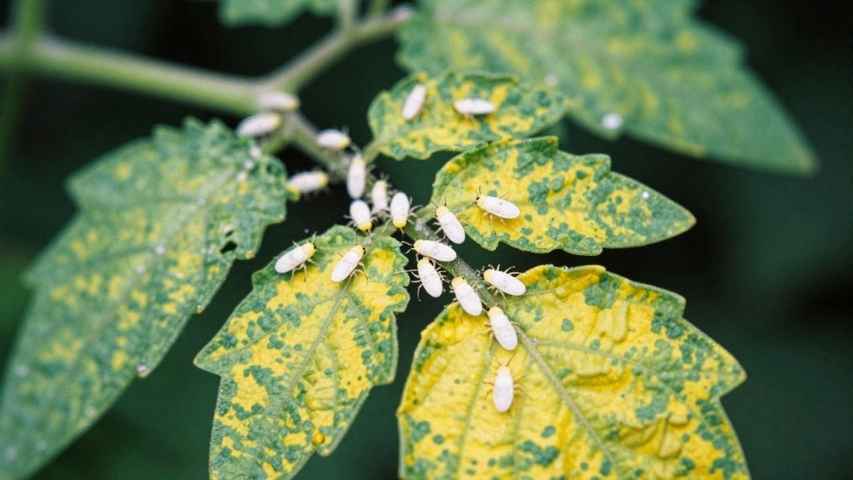
These tiny, yellowish insects have a powdery white appearance and tend to swarm when a plant is disturbed. Like aphids, they congregate on the undersides of leaves.
- Signs of Damage: Whiteflies suck sap from plants, causing leaves to turn yellow and wilt. (Whiteflies / Tomato / Agriculture: Pest Management Guidelines, n.d.) They also inject a toxin into tomatoes, causing “irregular ripening” and leaving green or yellow patches that don’t ripen properly. (Tomato Disease Field Guide, 2025)
- How to Control Them: Like with aphids, a strong spray of water can knock whiteflies off your plants. Attracting natural predators is a good long-term solution. For serious infestations, you can use horticultural oils, but don’t spray when it’s very hot, as this can harm your plants.
Stink Bugs and Leaffooted Bugs
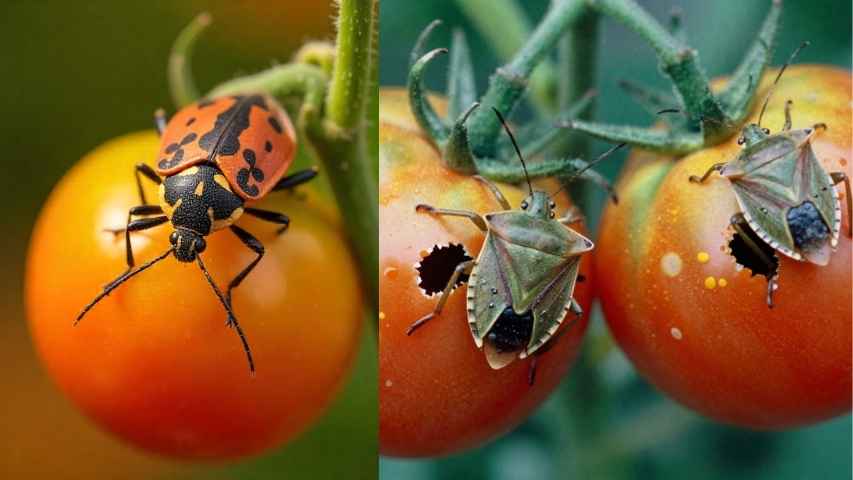
Stink bugs are shield-shaped and can be brown or green. (Stink Bugs / Tomato / Agriculture: Pest Management Guidelines, n.d.) Leaf-footed bugs have a leaf-like shape on their back legs. Both types give off a bad smell when bothered.
- Signs of Damage: These bugs poke holes in ripening tomatoes and suck out the juices. This causes yellow or white spots on the fruit’s surface, which can feel spongy. Under the skin, the tomato becomes hard and dry.
- How to Control Them: These bugs move around a lot and are hard to control with sprays. Picking them off by hand or using a butterfly net works well. Keeping your garden area clean and free of weeds will also help reduce hiding places for them over the winter.
Pests That Tunnel and Bore
These pests do their damage from inside the plant, tunneling through leaves and fruit.
Leafminers
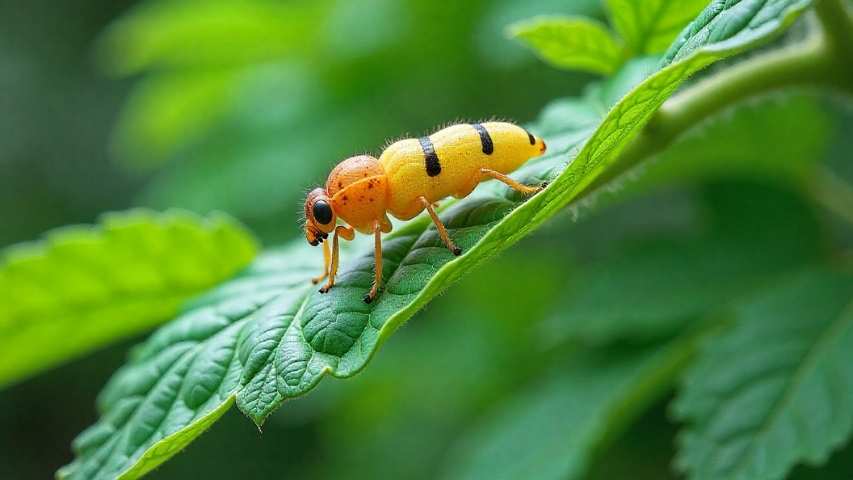
Leafminers are the larvae of small black-and-yellow flies. (Tomato Insect Pest Management – Gardening Solutions, 2023) The adult flies lay their eggs inside the leaves, and the hatched larvae tunnel through the leaf tissue. (Bug of the week, n.d.)
- Signs of Damage: Leafminers leave white, winding trails on leaves as they tunnel through them. This damage is mostly cosmetic, but a bad infestation can make it harder for the plant to photosynthesize.
- How to Control Them: Take off and throw away any leaves with leafminer trails to stop them from spreading. Parasitic wasps help control leafminers, so avoid broad-spectrum insecticides that could harm them.
Tomato Fruitworms
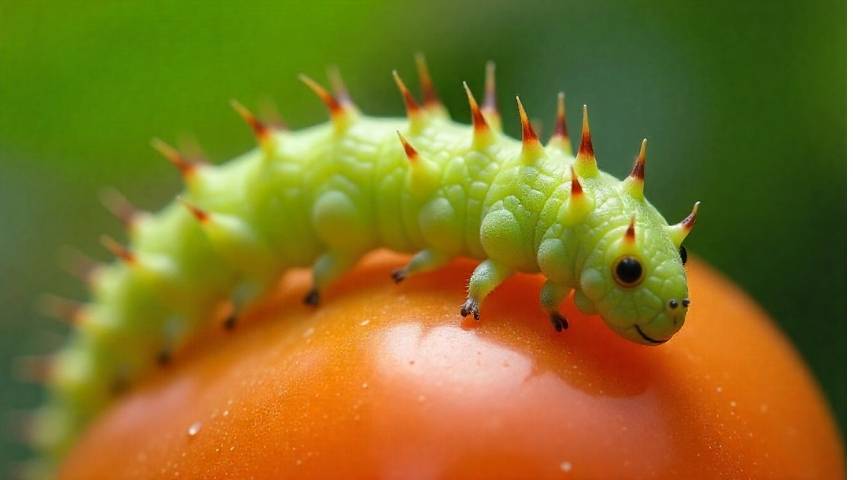
Also known as the corn earworm, the tomato fruitworm is a yellowish-green to brown caterpillar. (Corn earworm, 2025) They are one of the most destructive tomato pests. (Tuta absoluta, 2021)
- Signs of Damage: The larvae dig deep into the fruit, usually near the stem. They leave big, messy holes and fill the inside of the tomato with droppings, which causes it to rot from the inside.
- How to Control Them: Hand-picking can be effective if numbers are low. Applications of Bacillus thuringiensis (Bt) or Spinosad can control young larvae before they enter the fruit.
Protect Your Harvest
It’s not realistic to expect a garden with no pests. The secret to growing great tomatoes is managing pests, not eliminating them completely. Check your plants often, identify pests correctly, and start with the safest control methods. Healthy plants, thanks to good watering and mulching, are better able to handle pest problems.
With some careful attention and the right know-how, you can protect your plants and make sure you, not the pests, get to enjoy your delicious tomato harvest.